
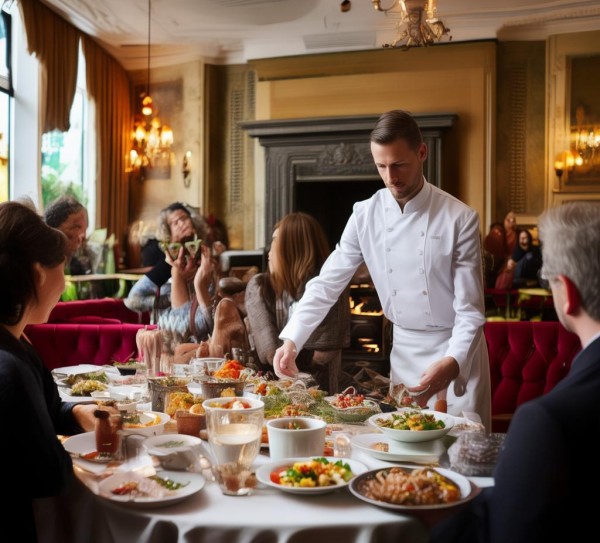
In today’s globalized world, the concept of dining service is constantly evolving, and whether a restaurant includes a hotel as part of its menu has become a topic of debate among food enthusiasts and businesses alike. While some may argue that hotels are not necessary for a traditional dining experience, others believe that including hotels can enhance the overall dining experience. In this article, we will explore the different perspectives on whether hotels should be included in a restaurant’s menu and why they play a significant role in the dining experience. Firstly, it’s important to understand what a dining service is. A dining service refers to the arrangements, services, and ambiance that are provided to customers in a restaurant. It includes the choice of food, the setting of the restaurant, the service provided by the staff, and the overall atmosphere. A hotel, on the other hand, is a luxury or residential building typically used for business or leisure, offering amenities such as private rooms, dining facilities, and entertainment options. When it comes to including a hotel in a restaurant’s menu, the decision often depends on the type of restaurant and its target audience. For instance, in a casual dining establishment, a hotel may not be necessary, as the focus is on the typical dining experience. However, in a upscale or premium dining establishment, including a hotel may be more appropriate, as it offers a luxurious and personalized dining experience. Similarly, in a modern restaurant, a hotel may not be required, as the focus is on the contemporary and innovative aspects of the dining experience. Moreover, some argue that including a hotel in a restaurant’s menu can enhance the overall dining experience, particularly for guests who are looking for a more luxurious or exclusive experience. For example, a high-end restaurant may offer a variety of dining options, including options that are typically reserved for guests who have stayed at a hotel. By providing these options, the restaurant can create a sense of exclusivity and prestige, which is highly valued by guests. Additionally, the inclusion of a hotel in a restaurant’s menu can also appeal to guests who are interested in exploring different types of dining experiences. For instance, a restaurant that offers both a traditional dining experience and a luxurious dining experience can cater to a wide range of preferences, making it more appealing to guests who have different priorities. In this way, the inclusion of a hotel can help to differentiate a restaurant from others in the market and attract a broader audience. However, there are also arguments against including a hotel in a restaurant’s menu. Some may argue that including a hotel can clutter the menu and make it seem like a high-end restaurant, which may not be necessary. Additionally, some may believe that including a hotel can lead to confusion for guests, as they may not know what to expect if they are not familiar with hotels. For example, a guest who is not familiar with hotels may find it confusing and intimidating to visit a restaurant that offers both a traditional and a luxurious dining experience. In conclusion, whether a hotel should be included in a restaurant’s menu is a matter of debate and depends on the type of restaurant and its target audience. On the one hand, including a hotel can enhance the overall dining experience by offering a luxurious and personalized dining experience. On the other hand, it may clutter the menu and confuse guests. Therefore, it is essential for restaurants to carefully consider their menu offerings and cater to the preferences and needs of their target audience. By doing so, they can provide a dining experience that is both authentic and memorable, whether the restaurant includes a hotel or not.